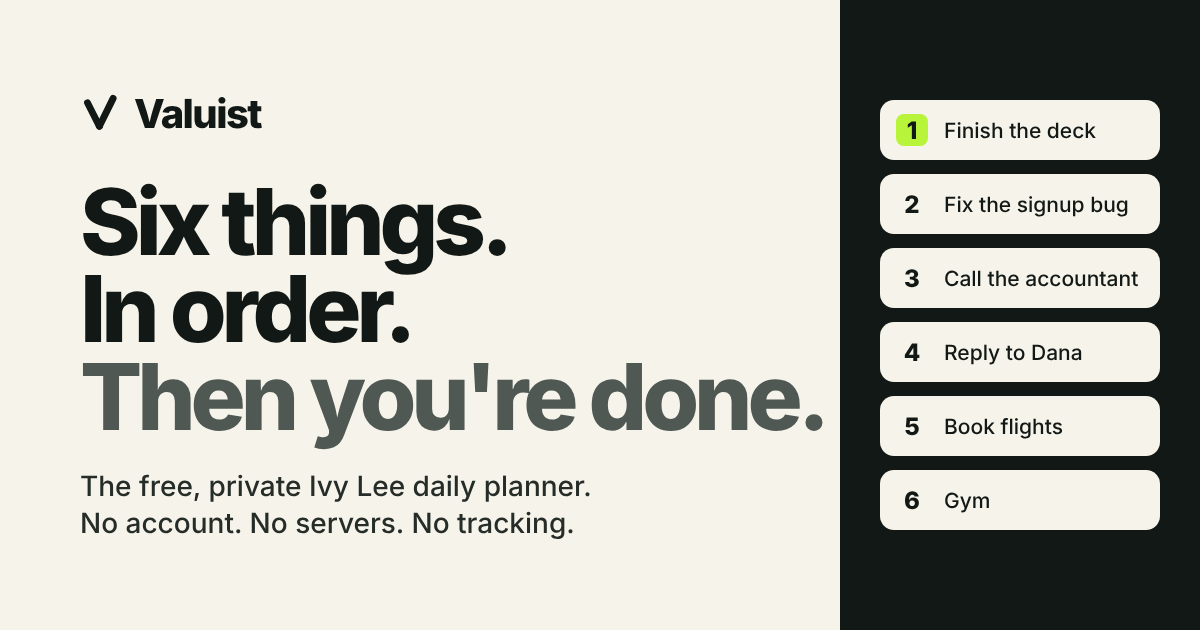
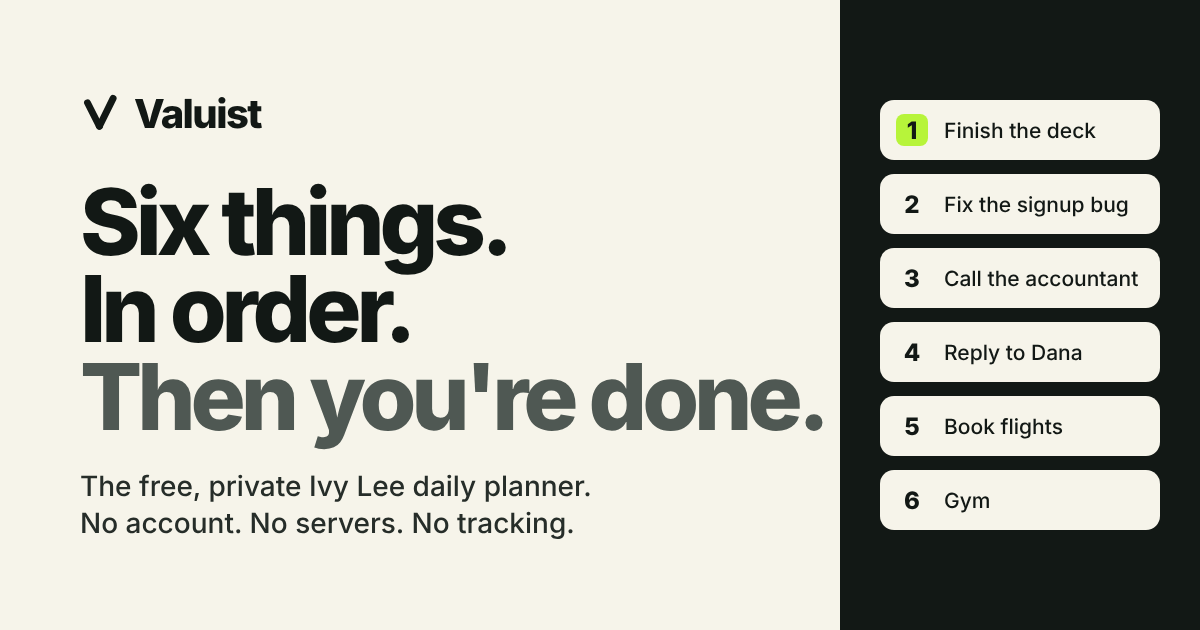
The to-do list that was worth $25,000.
In 1918, Charles M. Schwab ran Bethlehem Steel, one of the biggest companies in the world. He had no shortage of busy people. What he wanted was a way to get the right things done.
So he called in Ivy Lee, a consultant, who asked for fifteen minutes with each of Schwab's executives. He told every one of them the same thing:
- At the end of each day, write down the six most important things to do tomorrow. No more than six.
- Put them in order of their true importance.
- Tomorrow, start on the first one, and keep at it until it's finished. Then move to the second.
- Whatever you don't finish goes on the next day's list.
- Do this every working day.
Lee wouldn't name a price. Try it for three months, he said, then pay what you think it was worth.
That's the check Schwab is said to have sent him a few months later. In 1918, it was a small fortune.
A century later, it still works, because it removes the two things that wreck a day: deciding what to do next, and doing the easy things first.
The trouble is keeping it up. Paper lists get lost. Leftovers pile up. The big task sits at number one for a week. Valuist puts the method on your phone and handles the parts people quit on.